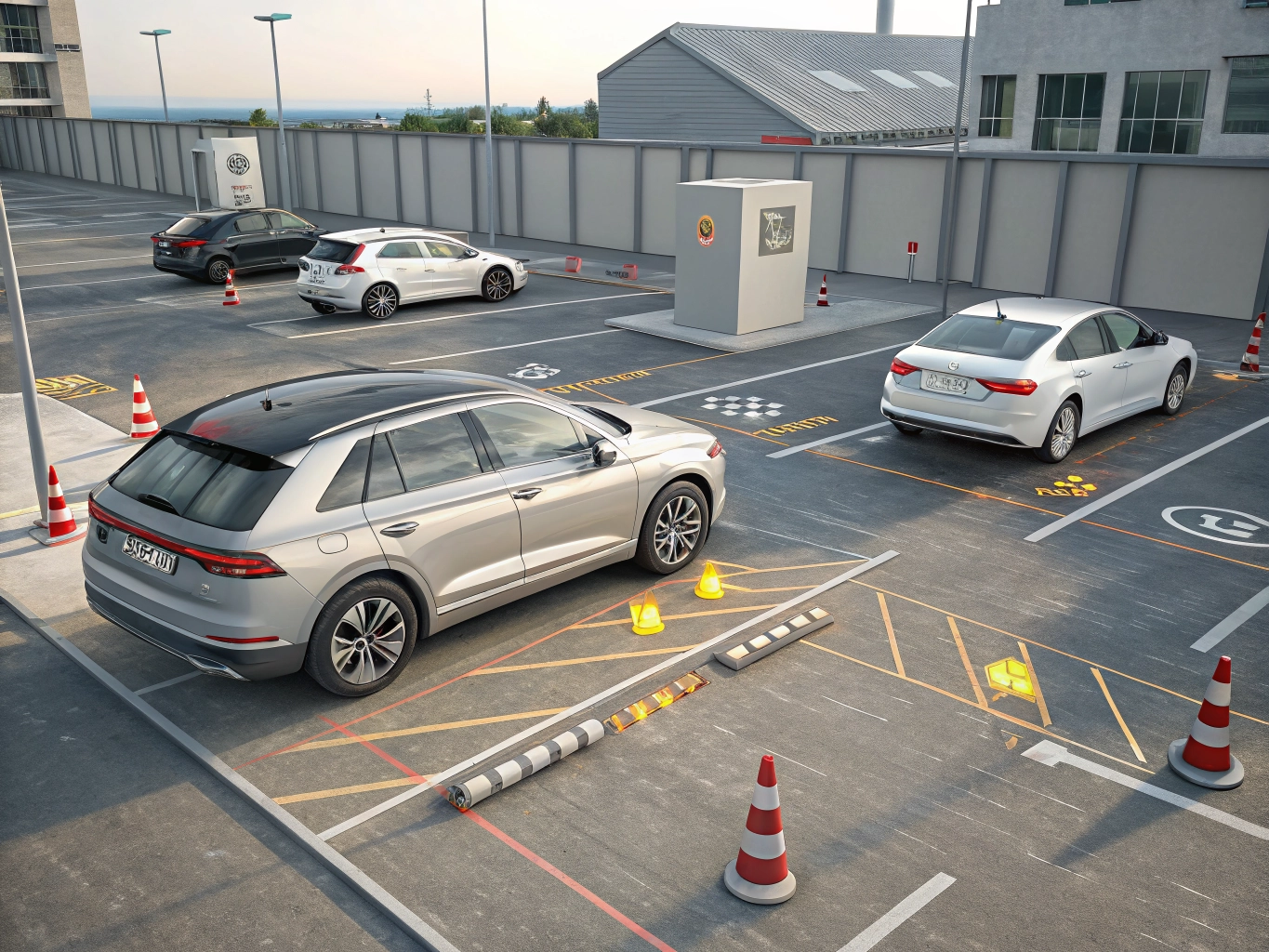
License plate recognition (LPR) has become the backbone of modern parking enforcement — it replaces paper permits and manual patrols with fast, automated plate reads that keep enforcement consistent and lots running smoothly. But no LPR system reads every plate, every time. Operators who understand why missing license plates can happen can work to reduce them, set realistic expectations, and choose parking enforcement technology that actually holds up in the real world.
Here’s a breakdown of the most common reasons LPR systems miss license plates — and what actually separates reliable license plate recognition technology from a system that quietly leaks revenue and creates enforcement disputes.
1. Camera Angle and Plate Skew
LPR cameras are trained to read plates within a fairly specific range of angles. A car that pulls in slightly crooked, parks at an angle in a compact or angled space, or backs into a spot can present the plate at an angle the camera’s optical character recognition (OCR) software wasn’t tuned for. The more oblique the angle, the more distorted the characters appear, and the higher the chance of missing a license plate or a missed capture entirely.
2. Lighting and Glare
Lighting is one of the single biggest factors in LPR accuracy and causes missed license plates. Direct sun glare, headlight reflection off a plate’s reflective coating, deep shadows in a parking garage, and low-light conditions at dawn, dusk, or overnight can all wash out or obscure plate characters. Systems relying on standard visible-light cameras without infrared (IR) illumination or high dynamic range (HDR) imaging tend to struggle most in these conditions.
3. Dirty, Damaged, or Obstructed Plates
Plates in the real world are rarely pristine. Road grime, mud splashes, snow buildup, faded paint, bent frames, and novelty plate covers or frames (including tinted or “ghost” covers designed specifically to defeat cameras) all interfere with a clean read and can cause missed license plates. Trailer hitches, bike racks, and towed equipment can also physically block the plate from camera view entirely — no amount of image processing can read a plate the camera never actually saw.
4. Motion Blur
For LPR cameras covering drive lanes, entrances, or curbside enforcement, vehicle speed matters. Cameras with slower shutter speeds or lower frame rates can capture a blurred plate on a vehicle moving at even moderate speed, especially in low light where shutter speed is often reduced to let in more light. Fast-moving traffic through an entrance lane is a common source of missed reads for lower-end camera systems.
5. Weather Conditions
Rain, fog, and snow reduce visibility and add reflective glare or physical obstruction (snow or ice accumulation on the plate itself). Heavy rain can also create water droplets on the camera lens or housing that distort the image mid-capture.
6. Plate Design Variability
Not all plates are created equal. Different states and countries use different fonts, colors, background designs, and reflective materials — and some designs (busy background graphics, low-contrast color combinations, stacked characters, or unusual character spacing) are inherently harder for OCR engines to parse accurately. Specialty and vanity plates, dealer plates, and temporary paper plates issued at the point of sale are especially prone to misreads, since they often lack the standardized layout OCR models are trained on. This is one reason a nationwide-scale LPR operator with experience across many states and plate formats has an edge over a system tuned for just one region.
7. Camera Resolution and Positioning
Lower-resolution cameras simply capture fewer pixels per character, which matters more as distance from the plate increases. A camera positioned too far from the drive lane, mounted at a poor height, or covering too wide a field of view relative to its resolution will struggle with plates at the edges of its coverage area — even under otherwise good conditions.
8. Software and Algorithm Limitations
Even with a clear, well-lit, well-angled image, the OCR engine itself has to correctly segment and classify each character. Older or less sophisticated recognition algorithms can still confuse visually similar characters (0/O, 1/I, 8/B), especially under partial occlusion or slight blur. This is one of the biggest differentiators between LPR vendors and causes missing license plates — the quality of the underlying recognition model matters as much as the camera hardware.
What This Means for Parking Operators
No LPR system — regardless of price point — achieves a literal 100% read rate under every real-world condition. But the gap between a mediocre system and a great one is significant, and it comes down to a few things:
- Multi-camera and multi-angle capture, so a missed read from one angle can be caught from another
- High frame rates and fast shutter speeds, to reduce motion blur in active drive lanes
- Modern, well-trained recognition models that handle a wide range of plate designs, not just the most common formats
- Redundancy and confirmation logic, so a single bad read doesn’t automatically generate a citation or enforcement action without a secondary check
The goal isn’t a system that never misses a plate — that’s not a realistic bar. The goal is a system that misses rarely, fails gracefully when it does, and gives operators the confidence that enforcement decisions are backed by accurate, verifiable data. Missing a license plate is something that will happen, but in a controlled environment that is monitored by a team the results can be less detrimental.
That’s the standard PAVE Mobility builds toward: enforcement technology that parking operators and the people who use their lots can actually trust. To see how this fits into a broader gateless, frictionless parking program, take a look at our process, or browse the industries we serve on our verticals page.
Have more questions about how LPR accuracy affects your parking program? Check our Frequently Asked Questions, or contact our team to talk through your specific lot or garage. You can also read more on where parking enforcement technology is headed in our post on 2026 Parking Industry Trends.