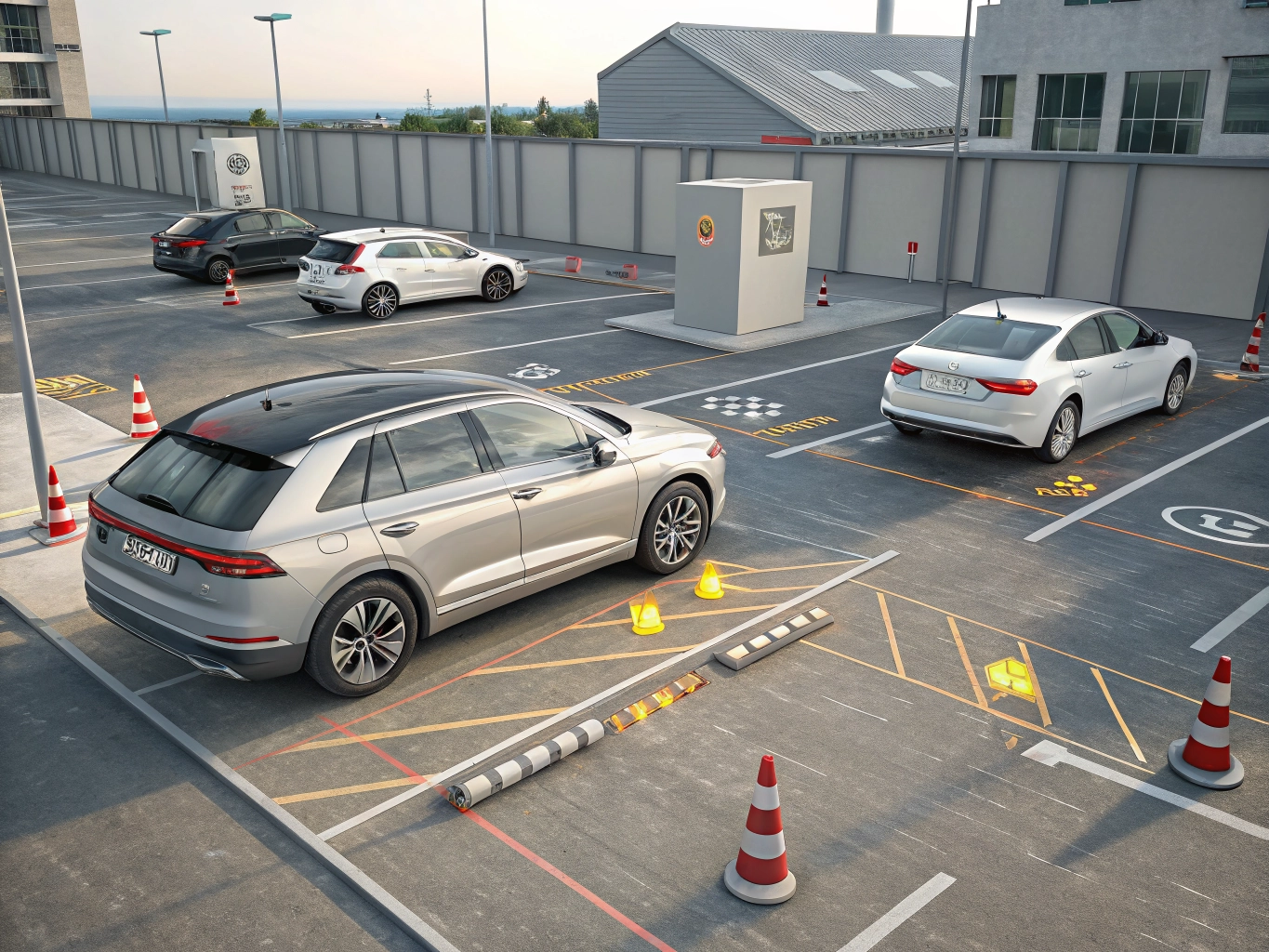
For parking operators running a gated facility, the access control system — gates, credential readers, ticket dispensers — has traditionally done the heavy lifting of keeping unauthorized vehicles out. But on its own, access control only answers one question: did this vehicle have a valid credential to get in? It doesn’t answer the harder questions: is this vehicle actually authorized, is it overstaying, and is enforcement happening consistently.
That’s where license plate recognition for parking enforcement comes in. When you integrate LPR with your existing access control hardware, you turn a simple gate into a data-driven enforcement system — one that verifies vehicles automatically, flags violations in real time, and can trigger a violation notice without a single manual patrol. This guide walks through exactly how that integration works, what to plan for, and how to avoid the most common pitfalls.
Why Integrate License Plate Recognition for Parking Enforcement With Access Control
Access control alone tells you whether a credential was used. It doesn’t tell you whether the right vehicle used it. A shared gate code, a cloned credential, or a permit holder letting a friend borrow their card all slip past a credential-only system undetected.
Layering license plate recognition for parking enforcement on top of access control closes that gap. The LPR camera captures the plate at the point of entry or exit and cross-references it against your permit, reservation, or payment database in real time. If the plate doesn’t match an authorized credential, the system can flag the vehicle instantly — no manual audit required.
This combination is the foundation of modern automated parking enforcement: access control manages the physical barrier, and LPR verifies that the vehicle behind the credential is actually who it claims to be.
Core Components of an Integrated System
Before starting an integration project, it helps to understand the pieces that need to work together:
- ANPR/LPR cameras at entry and exit lanes, positioned to capture a clean, unobstructed read of the plate at the correct angle and distance
- Access control hardware — gate arms, credential readers, loop detectors — that physically manages entry and exit
- A permit or credential database that stores which plates are authorized for which access points and time windows
- Integration middleware or an API layer that lets the LPR system and the access control system exchange data in real time
- A violation notice automation workflow that generates and sends a notice when a plate read doesn’t match an authorized credential
Most modern access control platforms and LPR systems are built to expose this kind of data through an API, which is what makes real-time integration possible without ripping out existing hardware.
Step-by-Step: How to Integrate Parking LPR With Access Control
1. Audit your existing access control hardware. Start by confirming what your current system can actually support — many gate and credential systems from the last decade already have an API or a supported integration path for third-party LPR data feeds.
2. Map your entry and exit points. Every lane that needs enforcement needs its own camera and its own decision logic (allow, flag, deny). Garages with multiple levels or entrances often need more cameras than operators initially expect.
3. Connect the LPR feed to your permit/credential database. This is the core of the integration: every plate read needs to check against a live, current list of authorized vehicles.
4. Define your violation logic. Decide what happens when a plate doesn’t match: does the gate stay closed, does it open but log a flag, or does it trigger an immediate notice? This decision should reflect your enforcement policy, not just what’s technically possible.
5. Automate the violation notice workflow. Once a violation is flagged, the system should be able to generate and mail (or email) a notice automatically, without a staff member manually reviewing every flagged read. This is where violation notice automation turns LPR data into actual revenue recovery instead of just a log file nobody reads.
6. Test under real conditions, not ideal ones. Run the integration through rain, nighttime lighting, and peak-hour traffic before going live — conditions that expose gaps between “works in a demo” and “works in production.”
Common Integration Pitfalls (and How to Avoid Them)
- Treating LPR as a bolt-on instead of a core data source. If plate reads aren’t feeding directly into your permit database in real time, you’re not really integrated — you’re just running two separate systems side by side.
- Skipping redundancy planning. A single missed or misread plate shouldn’t automatically trigger an enforcement action; build in a confirmation step for edge cases.
- Underestimating lane-specific hardware needs. Angled entrances, tight turning radii, and multi-lane exits often need more cameras — or different camera placement — than a straightforward single-lane entrance.
- Manual violation review bottlenecks. If a staff member still has to review every flagged plate before a notice goes out, you’ve automated data collection but not enforcement. Full violation notice automation is what actually protects revenue and staff time.
Measuring Success: Parking Revenue Optimization After Integration
Once LPR and access control are working together, the real value shows up in the numbers:
- Faster violation detection — issues get caught the same day, not weeks later during a manual audit
- Higher compliance rates — when enforcement is consistent and automated, both permit holders and transient parkers adjust their behavior accordingly
- Reduced staffing needs for patrol and manual review, since the system handles first-pass verification automatically
- Cleaner audit trails for disputes, since every entry and exit is tied to an actual plate read, not just a credential swipe
These are the metrics that turn an access control upgrade into genuine parking revenue optimization, not just a security improvement.
Gateless vs. Gated: Where This Fits Into Your Broader Parking Strategy
Not every facility needs (or wants) a gate at all. PAVE Mobility has built its own approach around gateless, frictionless parking — using LPR to manage entry, exit, and enforcement without a physical barrier at all, which removes a major point of mechanical failure and customer friction entirely. You can read more about that approach on our process page and see the industries where it’s already deployed on our verticals page.
That said, plenty of operators have existing gated infrastructure that isn’t going away overnight, and integrating LPR with that access control hardware — exactly as outlined in this guide — is a legitimate and effective step toward better parking lot management in the meantime. We’re integrated with all of the major parking payment providers, and you can see the current list on our integrations page.
For a deeper look at how LPR technology itself is evolving, our earlier post, The LPR Revolution, and our guide to end-to-end digital parking management, are both good companion reads. If you’re specifically troubleshooting missed reads in your current system, see our post on why parking LPR systems miss license plates.
Industry Standards Worth Knowing
If your integration touches access control hardware from multiple manufacturers, interoperability standards matter. The Security Industry Association’s Open Supervised Device Protocol (OSDP) is the leading standard for access control device communication, and it’s worth asking any access control vendor whether their hardware supports it. For broader industry best practices around parking technology and enforcement, the International Parking & Mobility Institute is the field’s primary professional resource.
Frequently Asked Questions
Does integrating LPR with access control require replacing my existing gates? Usually not. Most integrations work with existing gate hardware, provided it supports an API or a compatible data feed. See our FAQ page for system-specific questions.
How fast does a violation notice go out after a flagged plate read? With a fully automated workflow, notices can be generated the same day, rather than waiting for a periodic manual review.
Is LPR accurate enough to enforce without human review? Modern LPR is highly accurate under good conditions, but a well-designed system still includes a confirmation step for edge cases like glare, obstruction, or unusual plate formats, rather than relying on a single read.
Ready to Integrate LPR With Your Access Control System?
Whether you’re running a fully gated facility or considering a gateless model, the right integration comes down to matching your enforcement policy to the right technology stack. Contact our team to talk through your specific facility, or explore our integrations page to see what’s already compatible with your current setup.